Pampered Pets or Procreation? The City Where People Choose furry friends Over Family
A little over twenty years back, a birthday celebration for spoiled pets included a specially made cake for them. dogs might have seemed odd to Argentinians.
But these days Buenos Aires makes headlines for having among the most pet owners per capita in the world. Public opinion surveys report pets in almost 80% of the city's homes. That’s about 20% more than the average city in the United States as indicated by a recent Pew Research Center survey, and far surpassing other nations in the area.
With an increasing number of Argentinians choosing not to have children due to their nation’s well-known economic volatility, dogs have emerged as the preferred choice for companionship.
According to government statistics, Buenos Aires currently has more than 493,600 dogs — surpassing the number of children under 14 years old, which stands at 460,600.
Venus stares in confusion at the candles dancing on her small birthday cake. The guests gather close with bated breath, yet she refrains from blowing them out.
Dogs Can’t blow out candles, after all. So, Venus’ owner stepped in, took a deep breath, and put out the flames amidst clapping, then served her mixed-breed black dog a piece of meat-flavored birthday cake.
"Venus is akin to my daughter," gushes Victoria Font, the founder of Barto Café, a bakery specializing in canine-friendly cakes located just south of here. Argentina ’s capital of Buenos Aires .
The people who were interviewed described themselves not as "owners" but as "parents."
"Sandro is my hero; he brings me happiness," stated Magalí Maisonnave, a 34-year-old stylist, about her dachshund.
In the football-mad nation, Maisonnave frequently puts Sandro in the shirt of her preferred team. River Plate , and takes him to local games.
"I am his mother," she stated.

The increasing love for dogs in Argentina parallels a decline in human fertility rates. In 2023, the country’s birth rate dropped by 6.5%, compared to the prior year, and stood at 41% less when contrasted with ten years back. Reports from kindergartens indicate difficulties in maintaining full enrollment levels.
Unable to manage larger expenses due to ongoing economic turmoil, Argentina’s middle and upper classes are now lavishing attention and resources on their pets instead. As joblessness climbs, government salaries drop, and the country recovers from a downturn under the libertarian leadership of President Javier Milei, dogs and cats have taken on significant roles within families as cherished members.
"It has become more difficult to obtain loans or purchase a house; there isn’t a single prescribed path for building a family," stated Dr. Marcos Díaz Videla, a psychologist with expertise in human-canine interactions. Animals are integrating into the family unit. Alongside people, they're influencing the interactions, customs, and daily patterns within the household."
The growing habit of treating pets like children is transforming the urban landscape in Buenos Aires, with an increase in pet hotels, boutiques, cafés, and even cemeteries popping up to capitalize on this trend.
Grooming parlors have stepped up their game, offering more than just baths and haircuts; they also provide services like nail care and spa treatments by the pool. For example, at El Experiencia Guau salon, clients can splurge up to $120 – approximately one-fourth of an average Argentinian’s monthly wage – for a full-service treatment including bathing, cleansing, polishing, moisturizing, styling, and fragrance application.
Nicole Verdier, proprietor of Argentina’s inaugural dog bakery named Chumbis, stated, “These are creatures with short lives. In their lifetime, we must provide them with the finest.” Her establishment crafts treats like biscuits, cakes, croissants, burgers, and canapés using premium meats such as beef, poultry, and pork.
This anthropomorphization of dogs has led to a novel term — "perrhijo" — which blends the Spanish words for “dog” and “child.”
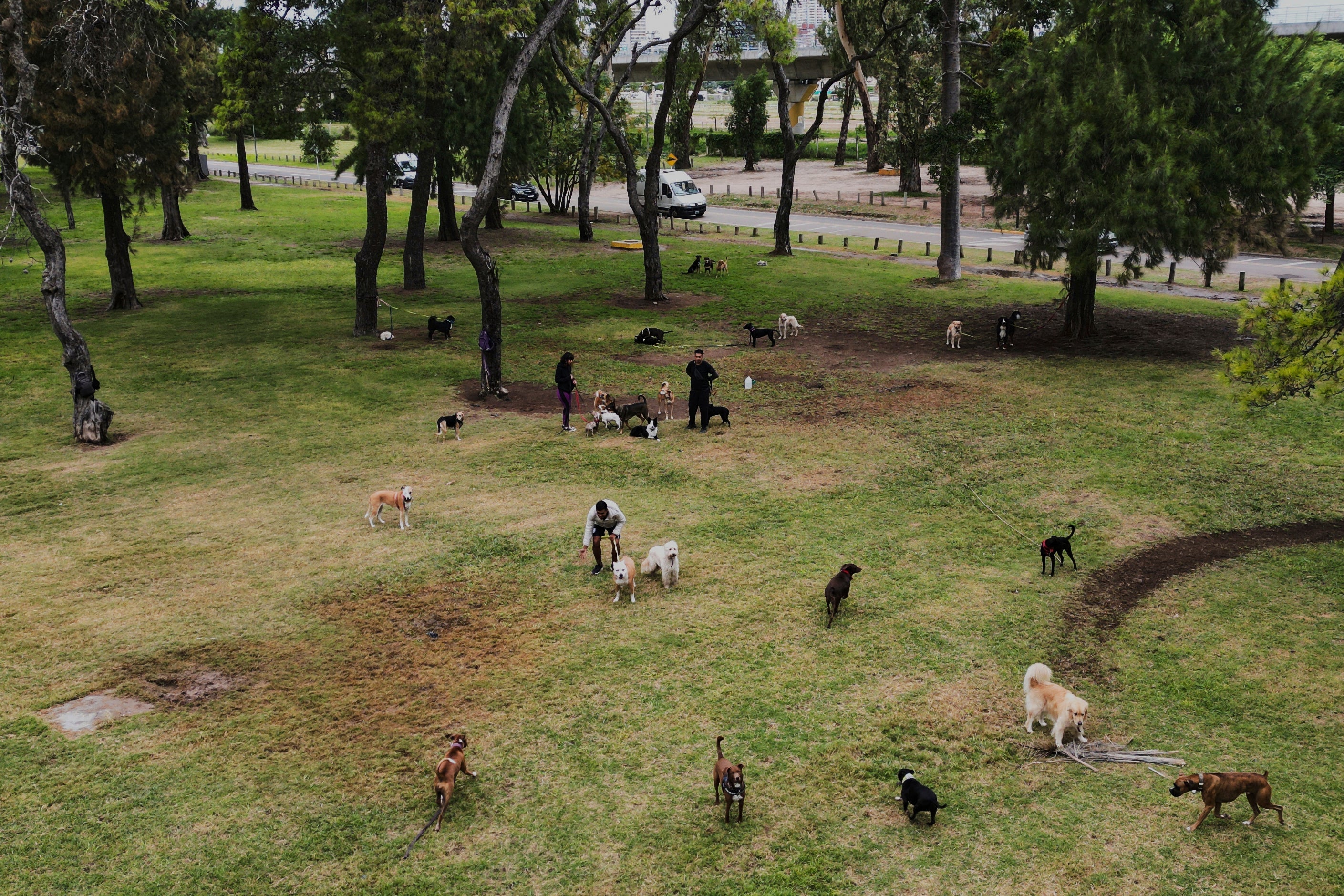
In Buenos Aires, where leash-pullers outnumber stroller-pushers in many neighborhoods, lawmakers have proposed a range of pet-friendly initiatives, including bills to ease access for pets to public transport.
“The city has come a long way, but I believe it now has the obligation to take a bigger leap,” said local lawmaker Emmanuel Ferrario. His centrist “Vamos por más” (Let’s go for more) party has presented five such bills now being debated in the city legislature. One seeks to create a registry of dog walkers who must pass an exam every two years and undergo CPR and animal behavior training.
“I see an opportunity for it to become the most pet-friendly city in the region,” Ferrario said.
Other politicians fret about the proliferation of pet-keeping as a symptom of a bigger crisis. They ask why young people in Argentina choose raising pets over raising children as the country ages rapidly.
“The rankings (of pet ownership) are unsettling. ... Buenos Aires has so many dogs and so few children,” said Clara Muzzio, the city’s conservative deputy mayor. “A world with fewer children is a worse world.”
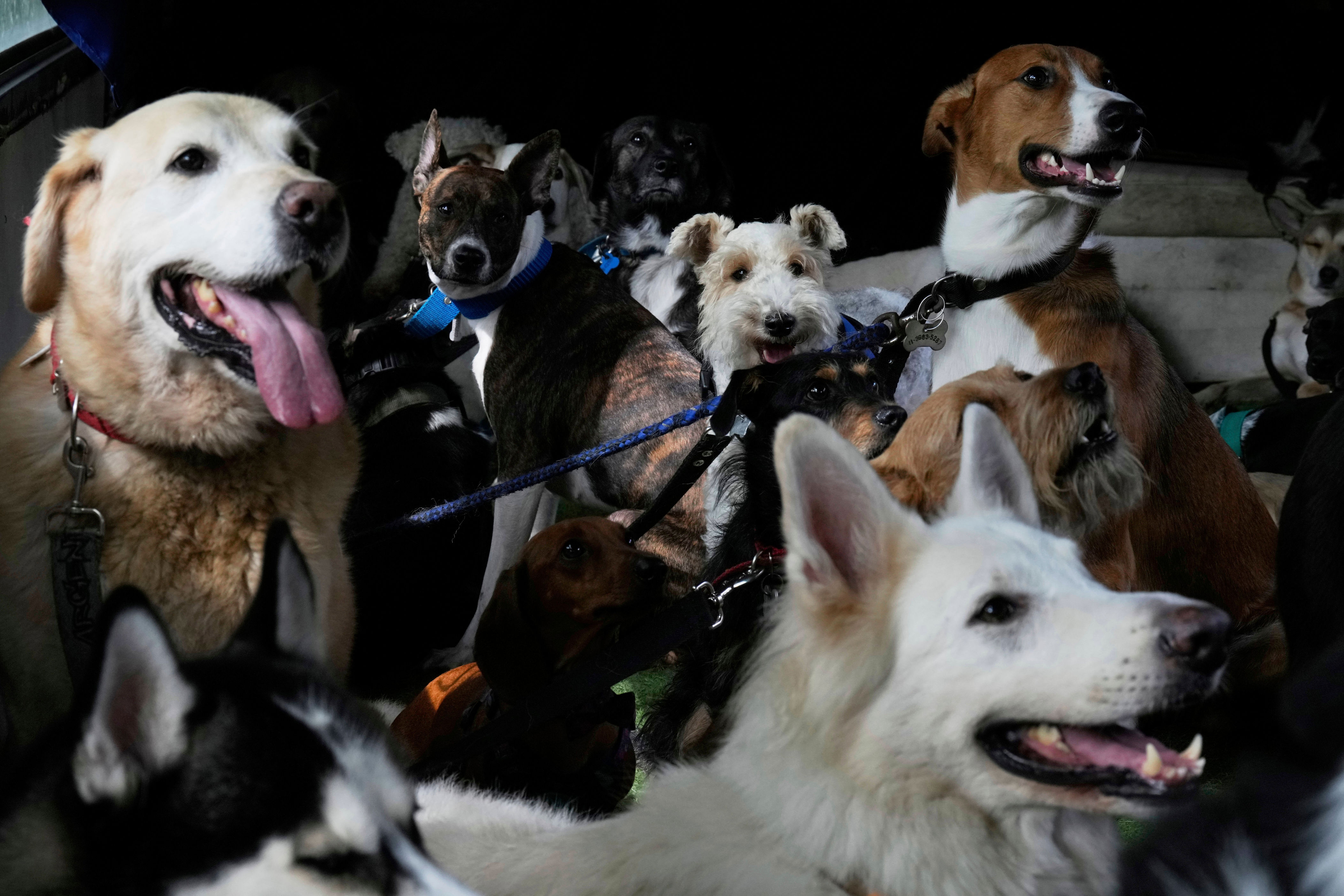
Maybe Argentina’s most notable canine enthusiast is its conservative President Javier Milei, who entered the government residence in December 2023 accompanied by four English mastiffs he affectionately refers to as his "four-legged kids."
A bold television figure chosen to save Argentina from its worsening financial downturn, Milei has christened his four dogs—Murray, Milton, Robert, and Lucas—in honor of the three American libertarians he holds in highest regard: economist Murray Rothbard, Nobel laureate Milton Friedman, and scholar Robert Lucas. These canines are exact replicas genetically created using samples from Milei’s previous dog, Conan, which passed away in 2017.
Milei continues to mention Conan using the present tense, fueling strong speculations regarding how many dogs he actually possesses. Ever since taking office, these canine companions have stayed out of view. Despite a governmental decree forbidding staff from sharing details with the public concerning Milei’s mastiffs, this hasn’t significantly reduced the debate surrounding the matter.
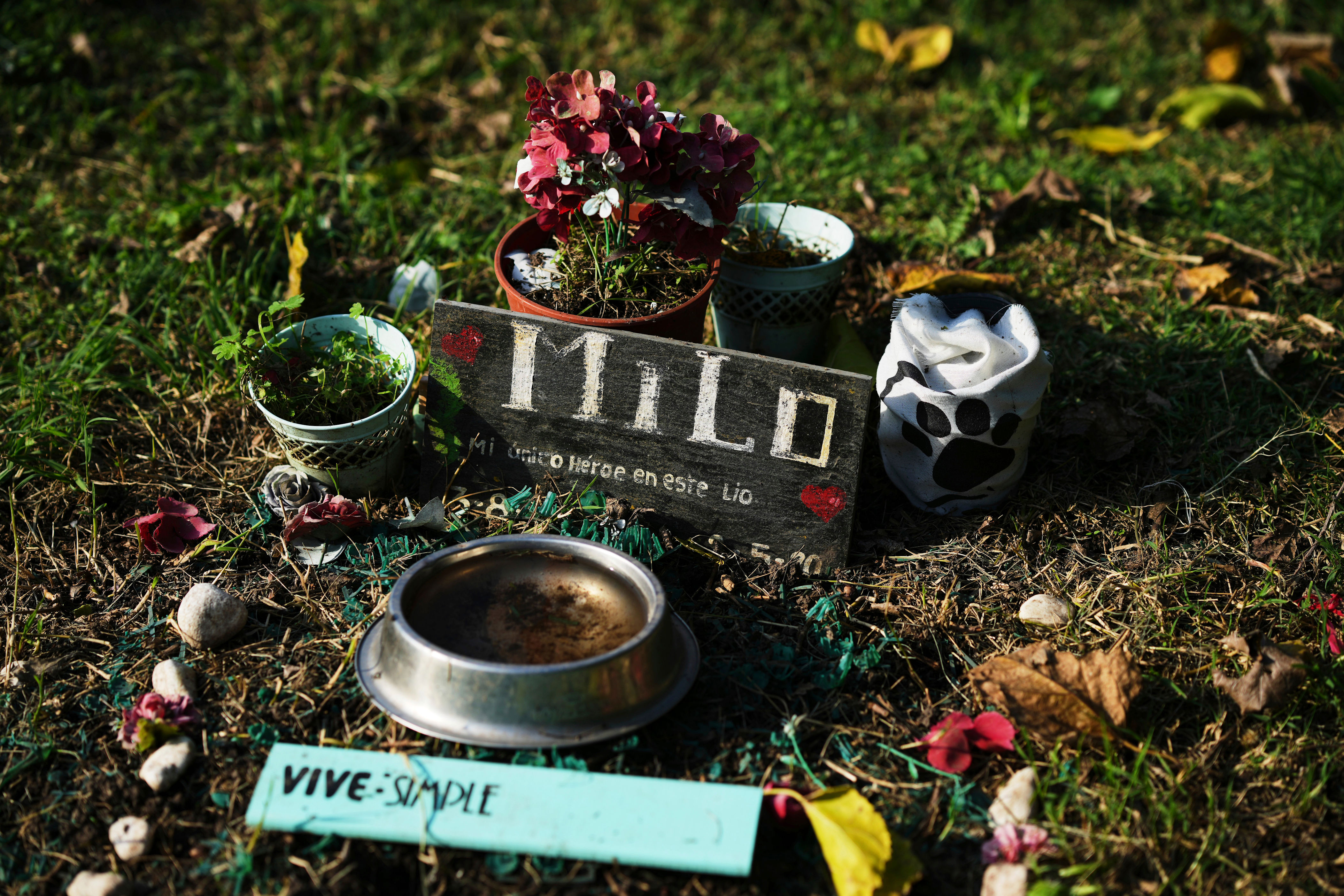
For pet owners who are heartbroken and lack the funds to clone their deceased dogs, Argentine undertakers offer burial and cremation services.
At Gardens of the Soul, a pet cemetery located within an animal shelter close to Buenos Aires, demand has increased dramatically. Here, owners participate in poignant ceremonies to say goodbye to their pets and frequently pay visits to their burial sites.
Within this area, around 300 gravestones bear traditional Argentine dog names, such as Negro and Coco , scattered with photos, hand-written notes, and blooms.
"Previously, we might not have had any burials for two months," explained shelter manager Alicia Barreato. "Now, it happens at least once or twice every week." She continues to grieve over her initial rescue—a puppy she discovered alive inside a sack of discarded canine corpses back in 2000.
That gruesome image haunts her, she mentioned. However, she finds solace in the fact that, ten years later, she provided her "perrhijo," Mariano, with a respectful burial.
I vowed to myself that I would locate him once more," she stated as her eyes rested upon his polished marble headstone. "Whether this happens at the brink of my demise or sometime after, we will meet again.
Since 1986, The Independent has campaigned for what we believe in, not what we are told to believe, with integrity, inclusion, innovation and independence as our guiding principles.

Post a Comment for "Pampered Pets or Procreation? The City Where People Choose furry friends Over Family"